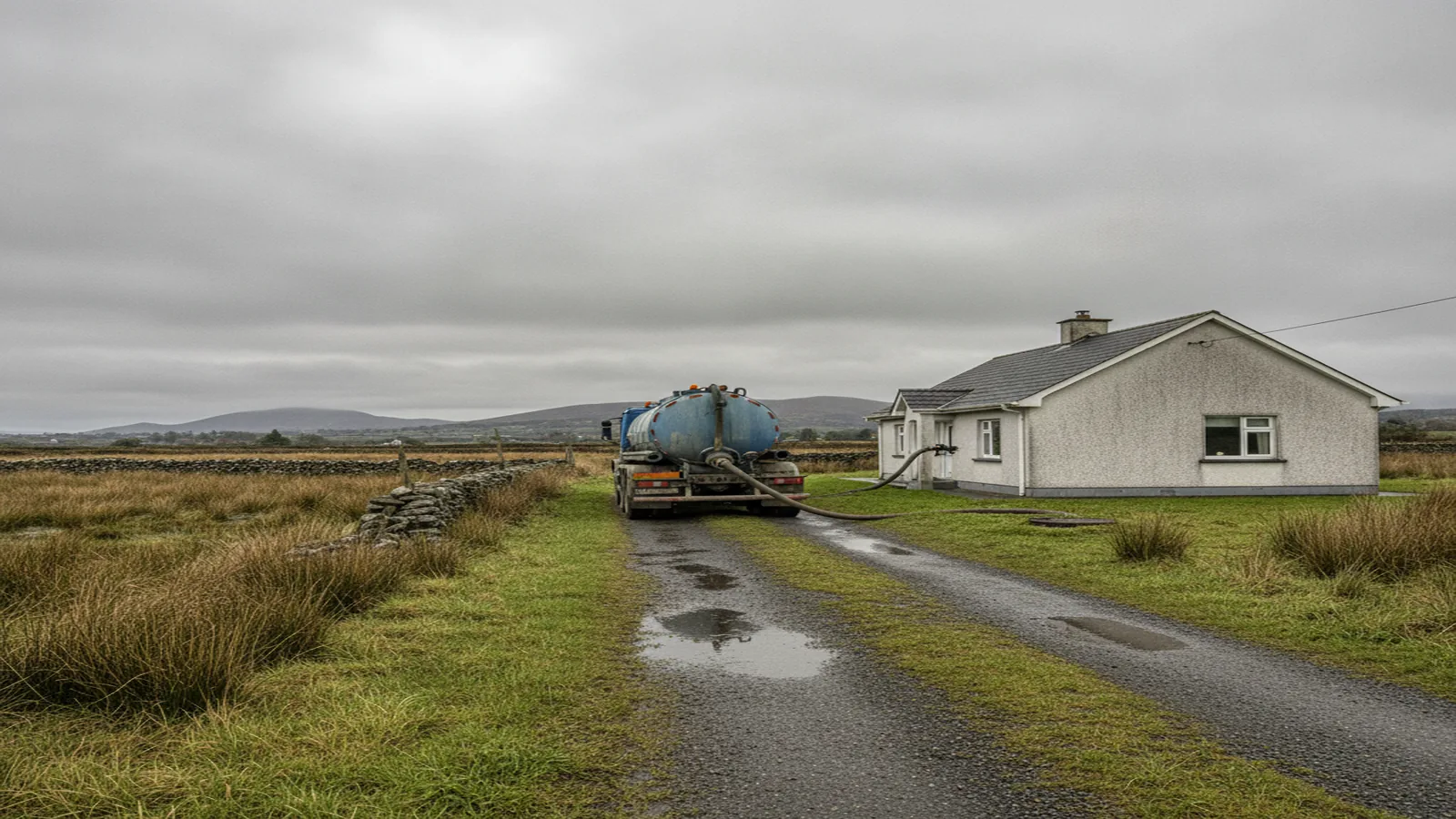
Read the notice before you price the job
The most expensive mistake after a failed inspection is treating the advisory notice as a instruction to replace the system. It is not. It states the reasons for failure, the works needed, and a deadline. Very often the works are narrower than a homeowner fears — a broken or missing component, a tank that is not watertight, an access cover that is unsafe, ponding over the percolation area — and the remediation is scoped to the actual risk.
That scoping is set out in the official guidance: the works required depend on the nature of the problem, the extent of risk to public health or the environment, the existing site size, and the hydrological and geological conditions present. Age alone is not a failure.
The three grant schemes, plainly
All three are worth 85% of the cost up to €12,000, and all three are administered by the local authority. What differs is how you become eligible.
- National Inspection Plan scheme. Works must arise directly from an inspection carried out under the National Inspection Plan, and the advisory notice issued afterwards. This is the route most people in the west will use.
- Prioritised Area for Action scheme. The house must sit in a designated Prioritised Area for Action, and you must have received a letter from the Local Authority Waters Programme Office confirming you may apply.
- High Status Objective Catchment Area scheme. The house must sit in a designated High Status Objective Catchment Area, and again the local authority must write to you first. This one matters more than most people realise in Sligo and Leitrim, where high-status catchments are common.
There is no scheme you can apply for simply because a system is old or failing. Two of the three require a letter; the third requires an inspection.
Work has to meet the 2021 Code
Whichever scheme applies, the eligible works must be carried out in accordance with the EPA's 2021 Code of Practice. That is not a formality — it governs what may be installed on your ground, and on slow-draining western sites it is the difference between a workable upgrade and an unworkable one. See percolation testing for what the ground has to show, and replacement for what can be installed when repair is not enough.
Frequently Asked Questions
01 I failed an inspection. What happens now?
You will receive an advisory notice within 21 days of the inspection. It sets out why the system failed, what works are needed, and the deadline for carrying them out. It also opens the door to the grant scheme tied to the National Inspection Plan — that scheme exists specifically for works arising from an inspection and the notice that follows it. If you disagree with the finding, you can request a re-inspection for €20.
02 Will I be made to install a modern system?
No, and the Department says so directly: there is no question of imposing modern standards on older systems, or of householders having to acquire additional land to remediate systems arising from an inspection. The standard being applied is whether the system causes a risk to human health or the environment. Where a system fails, the remediation required is based on the nature of the problem, the extent of the risk, the size of the site, and the ground conditions.
03 How much is the grant worth?
85% of the cost of the works, up to a maximum of €12,000. That maximum rose from €5,000 on 1 January 2024, and at the same time the old requirement to have registered the tank by 1 February 2013 was dropped — so advice telling you that you are disqualified on that date is out of date.
04 Which grant scheme applies to me?
There are three, and you do not choose between them. The National Inspection Plan scheme applies where works arise directly from an inspection and an advisory notice. The other two are geographic: one for houses in a Prioritised Area for Action, one for houses in a High Status Objective Catchment Area, both designated under the River Basin Management Plan. For both of those you must receive a letter confirming eligibility before you can apply — from the Local Authority Waters Programme Office in the first case, from the local authority in the second. You can check a High Status Objective Catchment Area by entering an Eircode in the map on gov.ie.
05 Is there anything the grant will not cover?
Routine maintenance, servicing and de-sludging never qualify. Beyond that, the house must have been built at least seven years ago, must not have received a septic tank grant in the last seven years, and must be permanently occupied — a holiday home does not qualify. All works must be carried out in accordance with the EPA 2021 Code of Practice, and the grant is paid only after the works are completed to the local authority's satisfaction.
06 How do I apply?
Through your local authority, not through a contractor and not online through a national portal. Application and claim forms come from the local authority in whose area the system sits, and the person to ask for is the Rural Water Liaison Officer or the rural water section. Anyone who tells you they can get the grant for you has misunderstood how it works.
Where We Do This Work
Septic Tank Repair & Upgrade is available across Galway, Mayo, Roscommon, Sligo and Leitrim — Galway, Mayo, Roscommon, Sligo and Leitrim. Each county page covers what is specific to it, from published prices in Galway to slow-draining ground in Leitrim.